Brook Green removals parking rules Hammersmith and Fulham Council: a practical guide for a smoother move
If you are planning a move in Brook Green, parking can be the bit that turns an otherwise tidy day into a stressful one. The van is ready, the boxes are labelled, and then the awkward question lands: where exactly can the vehicle stop? This guide on Brook Green removals parking rules Hammersmith and Fulham Council walks you through the practical side of moving day parking, loading, and planning so you can avoid unnecessary delays, awkward ticket risks, and last-minute scrambling in the street.
To be fair, most removal problems in London are not about the lifting itself. They are about access, timing, and space. A few minutes spent understanding the local parking setup can save a lot of faff later. We will cover why the rules matter, how they typically work in practice, what to check before move day, and how to organise the move so your removal team can get in, load up, and get out without causing headaches for you or your neighbours.
- Why Brook Green removals parking rules Hammersmith and Fulham Council matters
- How Brook Green removals parking rules Hammersmith and Fulham Council works
- Key benefits and practical advantages
- Who this is for and when it makes sense
- Step-by-step guidance
- Expert tips for better results
- Common mistakes to avoid
- Tools, resources and recommendations
- Law, compliance, standards, or best practice
- Options, methods, or comparison table
- Case study or real-world example
- Practical checklist
- Conclusion
- Frequently asked questions
Why Brook Green removals parking rules Hammersmith and Fulham Council Matters
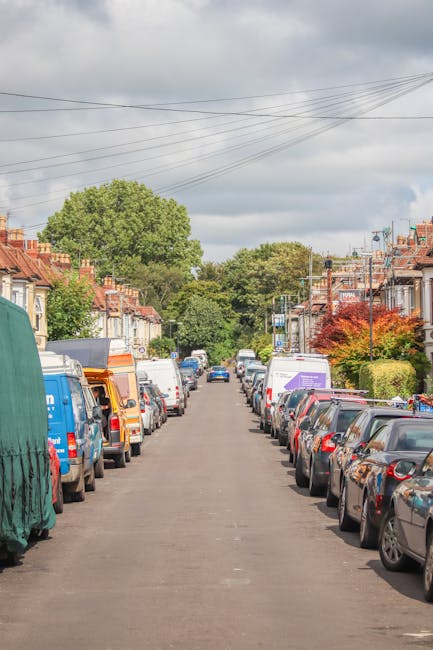
Brook Green sits in a part of London where space is precious, streets can be narrow, and parking is rarely "just available" when you need it. That is exactly why removals parking needs proper planning. If a van cannot stop close enough to the property, everything slows down. Carrying furniture further than expected increases time, labour, and the chance of bumps, scratches, or frustration. Nobody wants to be carrying a sofa through a drizzle at 8:15 in the morning because the nearest legal stopping place is half a street away.
The council side matters because local parking restrictions are not optional background noise. They shape where a removal vehicle can wait, how long it can stay, whether loading is allowed, and whether special permission or suspension is needed. Even where loading is permitted, the practical realities matter: signs, bay markings, resident permit zones, yellow lines, timed restrictions, and nearby road layouts all affect the day.
In our experience, the people who plan parking early usually have calmer moves. The people who leave it until the night before are often dealing with avoidable stress. That is the simple truth of it.
Expert summary: For Brook Green moves, parking is not a side issue. It is one of the core moving-day logistics. Check restrictions early, decide where the vehicle can stand, and build the move around that reality rather than hoping for the best.
How Brook Green removals parking rules Hammersmith and Fulham Council Works
The exact arrangement can vary from street to street, so the first rule is not to assume that the road outside the property will be fine for a van or lorry. In London, the signs on the street are the real answer. They tell you if parking is resident-only, pay-and-display, pay-by-phone, loading-only, single yellow, double yellow, or limited by time of day. For removals, the key is whether loading and unloading is allowed at the time you need it.
There are usually three practical layers to think about:
- What the road markings and signs allow - this determines if stopping is possible at all.
- Whether loading is permitted - some restrictions still allow short-term loading, others do not.
- Whether extra space or a suspension is needed - especially if you need to reserve a bay or prevent other cars from occupying the space.
If you are moving from a flat, access can be even trickier. A removal vehicle might need to park a little further away, which is where lift access, stair distance, and entry routes all begin to matter. A long carry from van to front door is manageable, but it changes the whole rhythm of the move.
If you are using a professional moving team, it helps to match the vehicle to the street. A man with a van setup may be ideal for a smaller Brook Green move where access is tight. For bigger house moves or more furniture, a larger vehicle may be better, but only if the parking space and road layout can genuinely support it. You do not want to bring a bigger truck just because it sounds efficient, then discover it has nowhere sensible to sit. That happens more often than you might think.
For larger or more complex jobs, some people also look at removal services or a dedicated removal van to balance access, capacity, and manoeuvrability. In a place like Brook Green, that balance is often the difference between a smooth morning and a slightly chaotic one.
Key Benefits and Practical Advantages
Getting the parking plan right has some very real advantages. Not glamorous, perhaps, but valuable. Let's face it, moving day is not the day for surprises.
- Less loading time: the closer the vehicle can legally stop, the quicker the boxes and furniture move.
- Lower risk of damage: shorter carries reduce the chance of knocks on walls, door frames, and furniture.
- Less disruption to neighbours: good planning helps avoid blocking driveways or creating unnecessary congestion.
- Better cost control: fewer delays can mean fewer billable hours and less wasted labour.
- Less chance of enforcement issues: if the parking is thought through, you reduce the risk of fines or complaints.
There is also a less obvious benefit: a calmer team. When everyone knows where to park, where to carry from, and where the entrance is, the move feels organised. That matters more than people often realise. A well-ordered first 20 minutes tends to set the tone for the rest of the day.
For families, students, or office managers, this can be the difference between a move that feels manageable and one that feels like a domino effect of small problems. If you are preparing for a home move, a student removals job, or even a business relocation through commercial moves, the same principle applies: the parking should support the move, not fight it.
Who This Is For and When It Makes Sense
This topic is relevant to a surprisingly wide group of people. You might be moving out of a Brook Green flat, handling a house move, arranging an office relocation, or simply moving a few larger items across west London. In all of those cases, parking rules affect the practicality of the day.
It makes sense to focus on parking rules if any of the following apply:
- You live on a street with limited bays or resident permits.
- Your property is on a busy road where stopping space is tight.
- You are moving furniture, not just a few bags.
- You need a van or truck for a specific time slot.
- You are dealing with shared access, basement flats, or awkward kerb space.
- You want to avoid fines, complaints, or delays.
For smaller moves, a flexible man and van arrangement may be enough. For larger properties, many people choose house removals or work with house removalists who understand the practical side of London parking and access. If your move involves heavy or awkward items, such as a piano, you will want to think even more carefully about stopping distance and ground-level access.
There is also a timing angle. A midweek move in the morning might be easier than a Friday afternoon one. Why? Because street activity, resident parking pressure, and local traffic can all change the level of difficulty. Sometimes the time of day matters almost as much as the street itself.
Step-by-Step Guidance
If you want a sensible way to approach Brook Green removals parking rules Hammersmith and Fulham Council, use a simple sequence. No drama, just method.
- Check the street signs early. Stand where the vehicle would need to stop and read the restrictions carefully. Do this in daylight if possible.
- Map out loading distance. Estimate how far the van would be from the front door, lift, or lobby. A short carry is ideal, but even a medium-distance carry can be workable if planned.
- Match the vehicle to the space. Decide whether a van, larger truck, or smaller vehicle is the more realistic fit. Bigger is not always better.
- Plan for worst-case access. Ask yourself: what happens if the closest bay is occupied? What if another car is in the way? What if the lift is slow? Small questions. Big effect.
- Contact the removal provider early. Share the street name, any restrictions, and details about stairs, lifts, or loading access. If you are comparing options, you may want to look at removal companies and how they handle local access planning.
- Prepare your building and neighbours. Let people know about the move window where appropriate. It can reduce friction, and a friendly heads-up goes a long way.
- Have the plan written down. Time, address, entrance point, parking plan, vehicle details, and contact number should be easy to find on the day.
If parking is unusually tight, you may need to consider splitting the move into two stages or using storage for part of the contents. That is not a failure. It is often the smart move, especially when the property and the street do not cooperate particularly well.
One small but useful habit: arrive a little earlier than you think you need to. Not hours earlier, obviously. Just enough to observe the street, note where cars are parked, and avoid the frantic "we'll just chance it" approach. That approach rarely ages well.
Expert Tips for Better Results
Here are the little things that make a moving day feel more controlled. These are the sort of details that people only learn after a few London moves, or after one very memorable one.
- Choose the shortest sensible carrying route. Front door, lift, stairwell, and vehicle should line up as neatly as possible.
- Use clear labels on boxes. It sounds basic, but when the team is walking further than usual, clear labels save time.
- Disassemble furniture before the van arrives. Parking delays are one thing; wrestling with a bed frame on the pavement is another.
- Keep the entry route clean and open. Hallways, stair landings, and lobby space become much more important when the van is parked a bit further away.
- Protect surfaces near the entrance. A bit of care at the threshold prevents scuffs and complaints.
- Use a realistic vehicle size. It is tempting to assume a larger vehicle means fewer trips. Sometimes true. Sometimes it just means more parking headaches.
If your move includes fragile or bulky pieces, consider professional packing support such as packing and boxes or more complete packing and unpacking services. Better packing means better stacking, and better stacking means less shuffling around in a tight parking window. Simple, really.
Also, do not underestimate weather. A wet pavement in the morning changes how you move items, especially when the van is parked a little farther away than hoped. A grey, drizzly Brook Green street at 7:30 can feel much longer than the same route on a dry day. London likes to remind you.
Common Mistakes to Avoid
Most moving-day parking problems are predictable. That is the annoying part. They are usually avoidable too.
- Assuming the front of the property is fine. It may not be legal, practical, or available.
- Ignoring loading restrictions. Loading is not the same as normal parking, and the distinction matters.
- Booking the wrong vehicle size. Too large and you cannot position it well; too small and you waste time making extra trips.
- Leaving neighbour communication until the last minute. A quick heads-up can prevent unnecessary tension.
- Not checking access for stairs, lifts, or entry codes. A locked lobby or missing code can stop a move fast.
- Failing to account for office or building rules. Some developments have their own loading expectations, and those can be stricter than the street outside.
One common pitfall is overconfidence. People often think, "It'll be fine; we're only there for a bit." Then the vehicle gets boxed in by another car, and suddenly that "bit" becomes a real problem. Not ideal.
If you are managing a business move, the stakes can be a little higher because staff time, IT equipment, and building access windows all pile in at once. In those situations, office removals or office relocation services can help you align access planning with the actual move schedule.
Tools, Resources and Recommendations
You do not need fancy software to handle parking for a Brook Green move, but a few practical tools and habits make the job easier.
- Street-level notes: take a photo of the signs and bay markings when you visit.
- A simple move schedule: write down arrival time, packing completion time, and departure target.
- Property access details: floor level, lift size, stair count, concierge rules, entry codes, and loading entrance.
- Vehicle dimensions: know whether your van is suitable for the road, turning space, and parking layout.
- Quote and planning page: if you are still comparing costs and options, the pricing and quotes page is a useful place to start.
- Trusted company background: reading about us can help you understand the team you are trusting with access, parking, and handling.
For particularly valuable or delicate items, make sure the moving team has the right cover and procedures. The insurance and safety information is there for exactly that sort of reassurance. And if you care about how unwanted items are handled, recycling and sustainability is worth a look too. It is one of those things people often appreciate more after the move than before it.
For small, flexible jobs, a man with a van arrangement may be the most practical fit. For larger loads, removal truck hire or even a moving truck may be more suitable, provided the street can accommodate it. That balance matters.
Law, Compliance, Standards, or Best Practice
Parking and loading in London are governed by local traffic restrictions, road signage, and council controls. The exact details can vary, so it is best to treat the signs and any local permit or loading guidance as the decisive reference for the street you are using. If your move needs a reserved space, a bay suspension, or other special arrangement, that should be handled in good time rather than left to the day itself.
From a best-practice point of view, the safest approach is straightforward:
- verify the road restrictions in advance,
- make sure the vehicle is suitable for the street,
- avoid blocking driveways or access points,
- keep loading times efficient and respectful,
- and communicate clearly with anyone affected by the move.
If you are moving items from a flat, especially in a shared building, be mindful of building rules as well as street rules. Those two things are not the same, and they can both matter. A good removal plan respects both. It is also just good manners, which never hurts.
Professional movers should also follow standard health and safety practice: safe lifting, clear walkways, sensible stacking, and proper handling of fragile items. If you want to see how that is approached in practice, the health and safety policy gives a useful sense of the standards involved.
Options, Methods, or Comparison Table
Different move types call for different parking strategies. Here is a simple comparison to help you decide what fits your situation.
| Move type | Parking approach | Best for | Main watch-out |
|---|---|---|---|
| Small flat move | Compact vehicle, close loading point, quick turnaround | Light to medium loads, limited access | Not enough space for larger furniture |
| House move | Dedicated bay or clearly planned stopping point | Multiple rooms, furniture, appliances | Longer loading time if parking is distant |
| Office move | Timed access, loading coordination, building awareness | Business equipment, crates, desks | Building rules and access windows |
| Student move | Short-stop access, minimal carry distance | Boxes, bags, a few items of furniture | Underestimating how busy the street can be |
| Large or specialist move | Careful vehicle choice and extra planning | Pianos, bulky furniture, high-value items | Access and handling complexity |
If you are unsure which route to take, smaller and more flexible is often better in Brook Green than larger and less manoeuvrable. That said, the right answer depends on the property and the volume of items. No single rule fits every street, which is exactly why planning matters.
Case Study or Real-World Example
A typical Brook Green move might look like this. A couple are moving out of a first-floor flat with a mixture of boxes, a sofa, a bed, and several awkward plants that someone insists must survive the move. The street is busy by mid-morning, and parking is tight. Instead of assuming the van can sit right outside, they check the restrictions in advance, note the nearest practical stopping point, and agree a loading plan with the removal team.
The team arrives a little early, sees that one bay is already occupied, and uses the back-up plan: a legal loading spot a short walk away. Because the boxes are already labelled and the furniture has been partly disassembled, the carry is straightforward enough. Not easy, exactly, but controlled. The move takes longer than if the van had been at the front door, but it stays smooth and there are no nasty surprises.
Now compare that with a less organised version. Same street, same flat, same items. But no one checked the parking signs, the van turns up too large for the available space, and the crew spends time circling the block while someone downstairs tries to "hold" a place with a recycling bin. You can probably guess how that ends. Not brilliantly.
The lesson is simple: the parking plan shapes the whole experience. Good planning does not eliminate every problem, but it takes the unnecessary ones off the table.
Practical Checklist
Use this checklist before move day. It is the kind of thing that feels almost too basic until it saves you an hour.
- Check the road signs outside the property and nearby.
- Confirm whether loading is allowed at your move time.
- Decide where the vehicle will stop legally.
- Measure or estimate the walking distance from vehicle to entrance.
- Share floor level, lift access, and stair details with the movers.
- Make sure furniture is ready to move, not still half-built.
- Label boxes clearly by room and priority.
- Alert neighbours or building management if needed.
- Keep the entrance route clear and dry if possible.
- Have contact numbers and arrival times to hand.
- Prepare a back-up plan if the nearest space is occupied.
- Review terms and conditions so you know what is included and what assumptions should not be made.
If you want a smooth move, start with the parking question first. The rest tends to fall into place more easily after that.
Get a free quote today and see how much you can save.
Conclusion
Brook Green removals parking rules Hammersmith and Fulham Council may sound like a small detail, but in real life it is one of the biggest influences on how a move feels. The right parking plan reduces carry distance, protects furniture, saves time, and keeps the day on a calmer track. That is true whether you are moving a studio flat, a family home, or an office with more boxes than anyone admits to owning.
In practice, the best approach is usually the simplest one: check the signs, choose the right vehicle, plan the access route, and communicate clearly. If you take care of those basics, the rest becomes much easier to manage. And if the street is awkward, which happens, you can still work with it. You just need a plan that respects the space instead of fighting it.
That is the real difference between a stressful move and a controlled one. And honestly, that little bit of control can make the whole day feel lighter.
Frequently Asked Questions
Do I need to check parking rules before a Brook Green removal?
Yes. Brook Green streets can have different parking restrictions from one block to the next, so it is wise to check the signs and plan the vehicle position before moving day.
Can a removal van stop outside my flat in Brook Green?
Sometimes, but not always. It depends on the local restrictions, the time of day, and whether loading is allowed. Never assume the space is usable just because it is close.
What if the parking space is already taken on the day?
Have a back-up plan. That might mean a different legal loading area, a slightly longer carry, or adjusting the arrival time. Good movers usually prepare for this possibility.
Is loading and unloading treated the same as parking?
No, not necessarily. Some restrictions allow short-term loading even where normal parking is not permitted. The exact allowance depends on the street and the signage.
What size vehicle is best for Brook Green removals?
It depends on the volume of items and the access on your street. A smaller van is often easier to position in tight London roads, while larger vehicles may suit bigger house moves if parking space allows.
Should I tell my neighbours before moving day?
It is usually a good idea, especially in flats or shared houses. A friendly heads-up can reduce complaints and make access easier if you need a bit of extra space.
How early should I plan the parking for my move?
Ideally, a few days in advance at minimum. For more complicated moves, earlier is better. The more restrictions involved, the more valuable early planning becomes.
What happens if my building has its own loading rules?
Then you need to follow both the building rules and the street rules. Building access windows, concierge instructions, and lift booking times can all affect the move.
Are smaller moves easier with parking in Brook Green?
Usually, yes. Fewer items, a smaller vehicle, and shorter loading time often mean less parking pressure. But even small moves can run into issues if the street is busy.
Can storage help if parking access is awkward?
Yes. If you cannot move everything in one clean run, using storage can reduce pressure and let you break the move into manageable parts.
What should I ask a removal company about parking?
Ask how they handle loading access, vehicle size, street restrictions, and timing. A good company will be used to London parking quirks and will help you plan realistically.
Is it worth paying for professional help with a tight Brook Green move?
Often yes, especially if the street is restricted, the furniture is heavy, or you are on a deadline. Professional movers can save time and reduce the risk of mistakes that become expensive later.
If you are getting ready to move, take the parking question seriously from the start. It is a small detail with a big effect, and getting it right can make the whole day feel much more manageable.